
Special Offer -
Save big on your next home improvement project!
How to Read a South Florida Wind Mitigation Inspection Report (Form OIR-B1-1802)

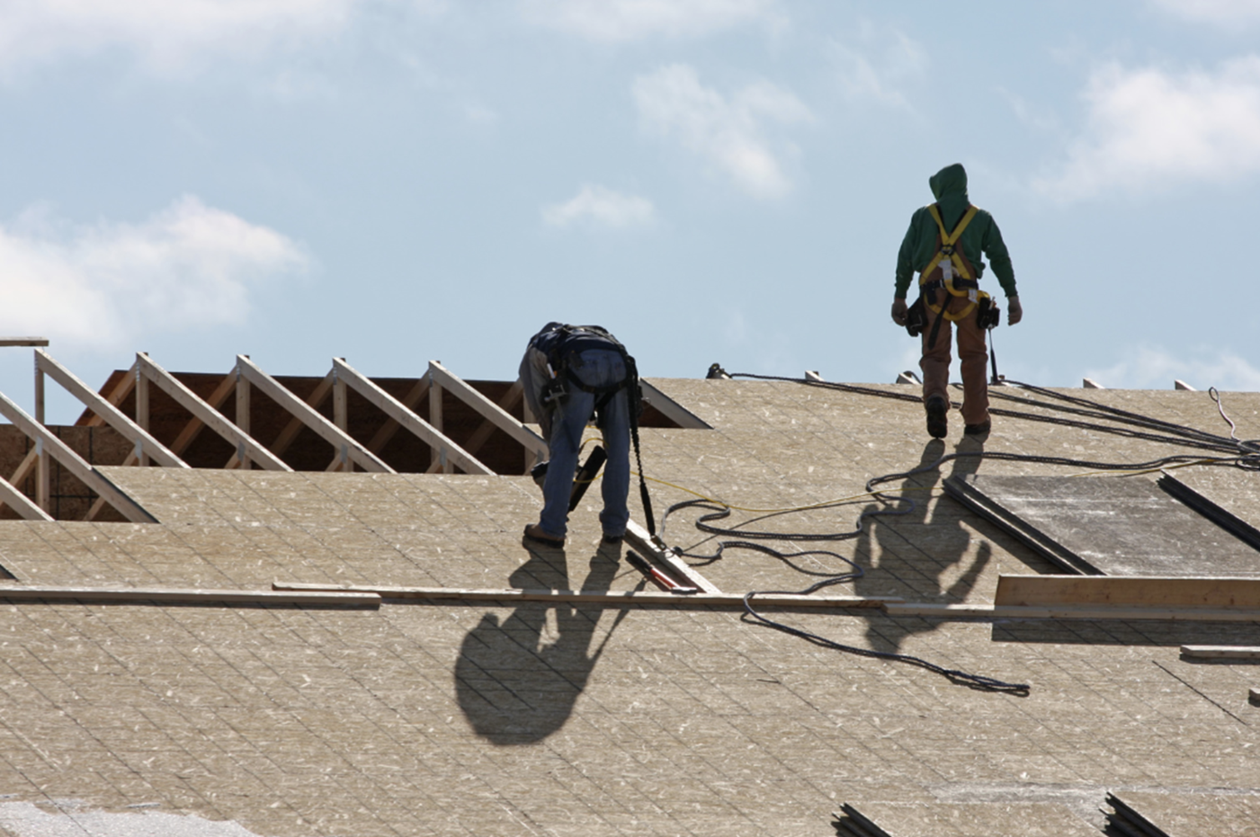
When your annual home insurance renewal packet arrives in the mail, it often brings a spike in anxiety, and a higher premium. In South Florida, property insurance costs have risen sharply in recent years across Miami-Dade, Broward, and Palm Beach counties.
However, many homeowners overlook a powerful legal document that can immediately slash hundreds or even thousands of dollars off their annual premium: Form OIR-B1-1802, officially known as the Florida Uniform Mitigation Verification Inspection Form.
Under Florida law (section 627.0629), insurance carriers are legally required to give policyholders premium discounts for hurricane-resistant structural features. But to claim those credits, you must submit a valid wind mitigation inspection with your county.
If you recently completed a full roof installation or are reviewing your annual insurance paperwork, understanding how to read this form can save you substantial money. In this guide, we break down Form OIR-B1-1802, focus on the high-value roof deck attachment insurance discount, and explain why a new roof gives you the ultimate leverage for lower rates.
What is Form OIR-B1-1802?
Form OIR-B1-1802 is a standardized report created by the Florida Office of Insurance Regulation. A licensed inspector evaluates your home's exterior shell and attic structure to verify its wind-resistance features.
The document covers seven primary categories:
- Building Code Era: Verifies whether the home was built under modern, post-2002 building codes.
- Roof Covering: Documents the type, age, and Florida Product Approval of your roofing materials.
- Roof Deck Attachment: Inspects how your plywood/OSB sheathing is nailed to the wooden rafters underneath.
- Roof-to-Wall Connection: Evaluates the hurricane straps, clips, or single/double wraps locking your roof frame to your concrete walls.
- Roof Geometry: Identifies roof shape (e.g., Hip roofs earn the highest automatic shape discount).
- Secondary Water Resistance (SWR): Verifies the presence of a sealed underlayment layer beneath your shingles, tiles, or metal panels.
- Opening Protection: Verifies whether 100% of your windows, entry doors, and garage doors feature impact glass or approved shutters.
The Goldmine: Section 3 — Roof Deck Attachment
While every section carries weight, Section 3 (Roof Deck Attachment) is where homeowners often miss out on massive annual OIR-B1-1802 roof credits.
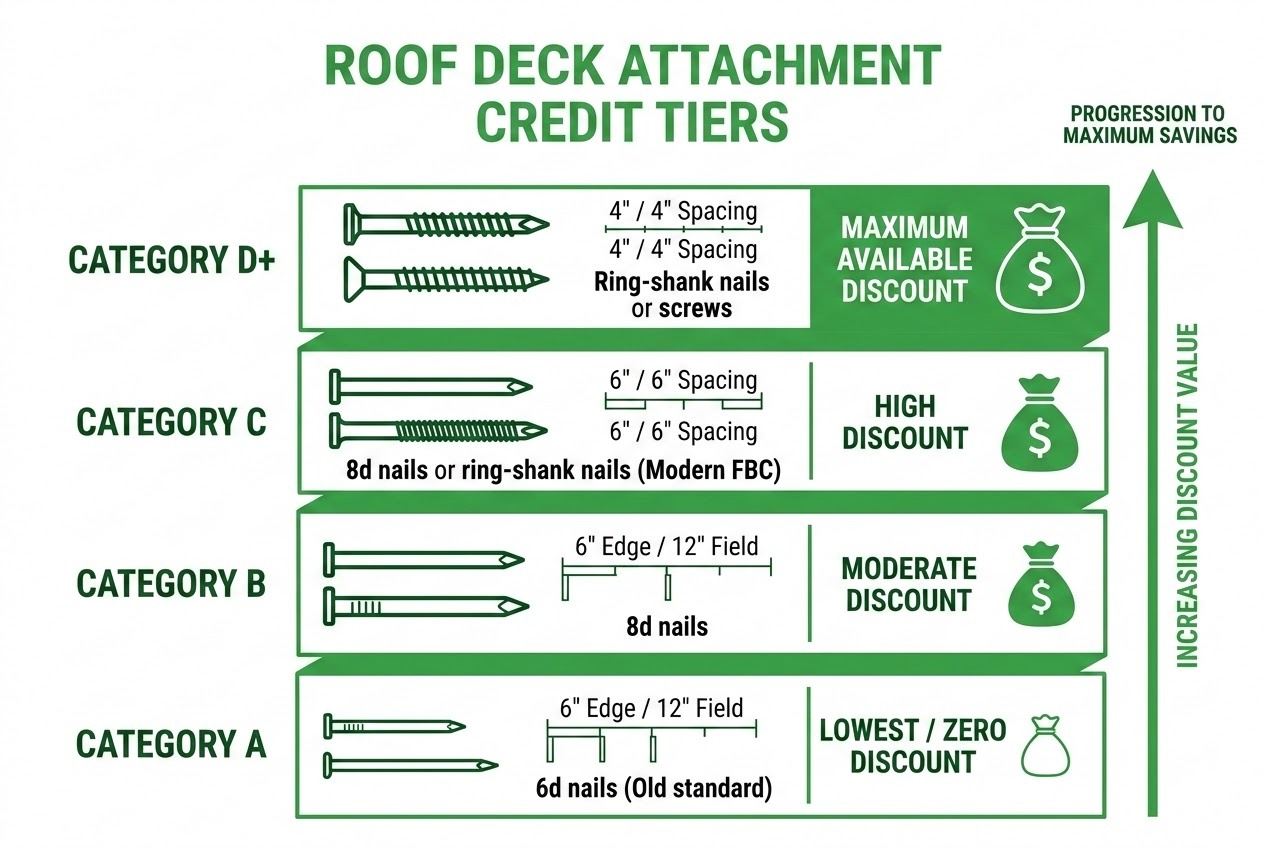
During a wind mitigation inspection, the inspector climbs into your attic space to physically measure two things: nail size and nail spacing securing the plywood roof deck to your home’s trusses.
Why Older Roofs Fail Section 3
Homes built in South Florida before 2002 were frequently constructed using short 6d nails or wider 12-inch spacing patterns. Under intense hurricane wind pressure, negative suction can pop those weakly fastened plywood sheets straight off the rafters, exposing the home's interior to water destruction.
When an inspector sees wide nail spacing in an older attic, they mark Category A, resulting in minimal insurance savings.
How a New Roof Installation Automatically Upgrades Your Rating
When you hire a licensed roofing contractor for a complete roof replacement, current High-Velocity Hurricane Zone (HVHZ) codes legally mandate re-nailing the entire wooden roof deck.
At Florida Home360, when we perform a roof installation in Pembroke Pines, Fort Lauderdale, or Miami, our crews drive heavy-duty, corrosion-resistant 8d ring-shank nails into the roof decking using a tight 6-inch edge / 6-inch field high-wind pattern.
This mechanical re-nailing automatically elevates your roof deck attachment rating from Category A straight to Category C or D, unlocking substantial annual insurance credits the moment your new wind mitigation report is submitted.
Don't Forget Section 6: Secondary Water Resistance (SWR)
Another major savings area on Form OIR-B1-1802 is Section 6 (Secondary Water Resistance).
SWR refers to a continuous waterproof membrane (such as a self-adhering modified bitumen "peel-and-stick" underlayment) installed directly onto the plywood deck beneath your tiles, metal, or shingles.
If high winds tear off top tiles or shingles during a hurricane, a certified SWR layer prevents a single drop of water from entering your attic. Verifying SWR on your inspection report triggers an immediate, dedicated line-item credit on your insurance bill.
How to Submit Your Report for Maximum Savings
Follow this step-by-step checklist once your roof installation or wind mitigation inspection is complete:
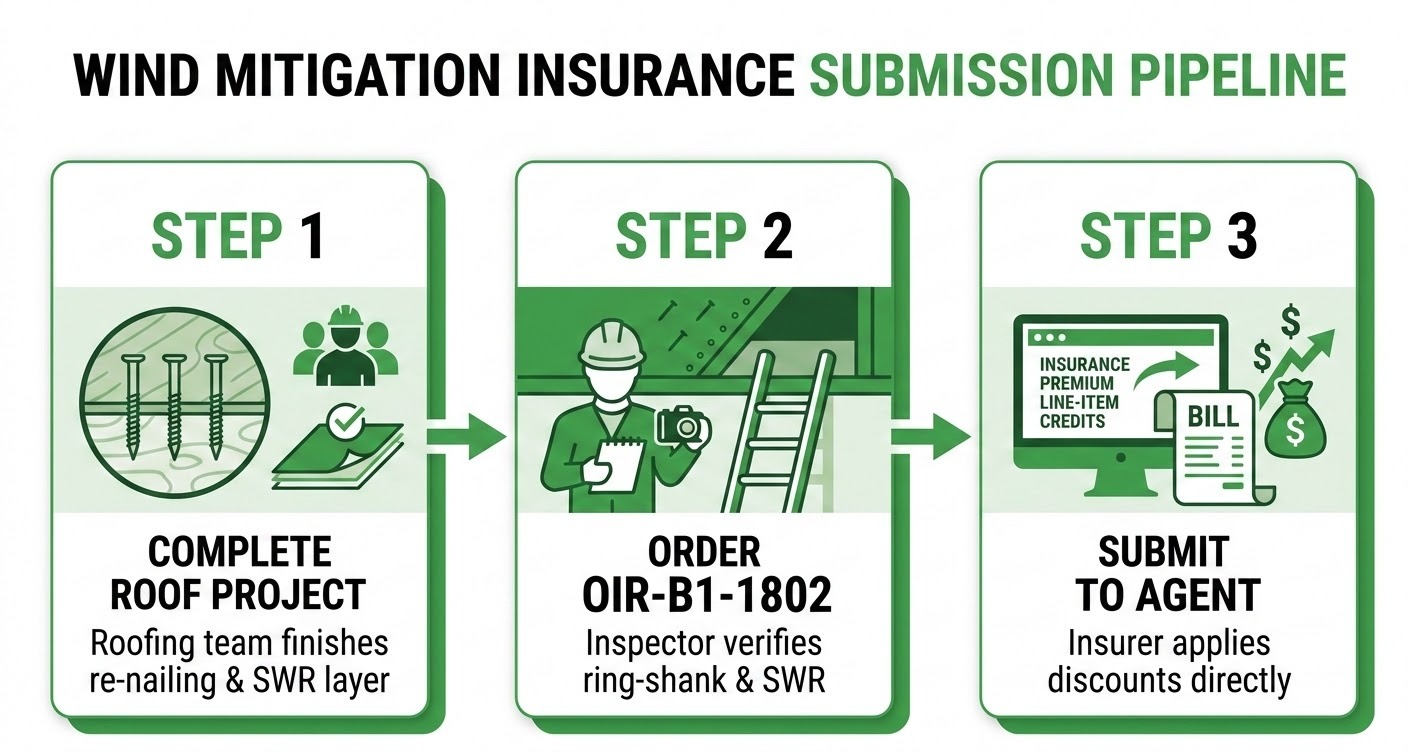
- Get a Fresh Inspection After a Re-Roof: Wind mitigation inspection reports are generally valid for 5 years. However, if you complete a roof replacement, your old form is obsolete. You must order a new inspection so the updated deck re-nailing and SWR underlayment are officially documented.
- Verify Inspector Credentials: Ensure page 2 of the report is signed by a licensed home inspector, general contractor, or professional engineer. Insurance carriers will reject forms signed by unaccredited parties.
- Send Directly to Your Insurance Agent: Email the full PDF report (including all attic photo attachments) directly to your home insurance agent or carrier portal. Request a confirmation receipt and an updated premium quote.
Maximize Your Home's Protection & Insurance ROI
Your roof is more than just shelter, it is a financial asset that directly impacts your annual cost of homeownership in South Florida. Upgrading an aging, unrated roof stops leaks while positioning your home for maximum windstorm insurance credits.
At Florida Home360, we specialize in high-performance, code-compliant roof replacement and installation across Miami-Dade, Broward, and Palm Beach counties. We ensure that every roof deck we re-nail and seal exceeds HVHZ building codes, leaving you with a safer home and a report ready for your insurance agent.
Planning a roof replacement or reviewing your wind mitigation options? Contact the local team at Florida Home360 today to schedule a comprehensive, zero-pressure roofing consultation!
Awards & Accolades

1000+ 5 Star
Google Reviews

A+ BBB
Rating

Angie Super
Service

GAF Master
Elite

Leader in
Energy Savings

