
Special Offer -
Save big on your next home improvement project!
Sliding Glass Door Water Leaks During Heavy Florida Rain: Repair or Replace?

If you’ve lived in South Florida for more than a few months, you know our summer and afternoon downpours are no joke. A sudden severe thunderstorm rolls in over Pembroke Pines, Fort Lauderdale, or Miami, dumping inches of rain in a matter of minutes.
While you're sitting inside expecting to stay dry, you look over at your patio and spot it: a pool of water creeping across your tile or hardwood floor right beneath your sliding glass door.
Water leaking under sliding glass doors during heavy rain is one of the most common, and frustrating, issues South Florida homeowners face. But how do you know if you're dealing with a simple maintenance fix or if it's time to replace the door entirely with a modern, high-velocity impact door system?
As local general contractors who inspect and replace hundreds of exterior openings across Broward, Miami-Dade, and Palm Beach counties, we’re breaking down why sliding doors leak during tropical rainstorms, how to troubleshoot the cause, and when a full upgrade is the smartest move for your home.
Why Sliding Glass Doors Leak During South Florida Rainstorms
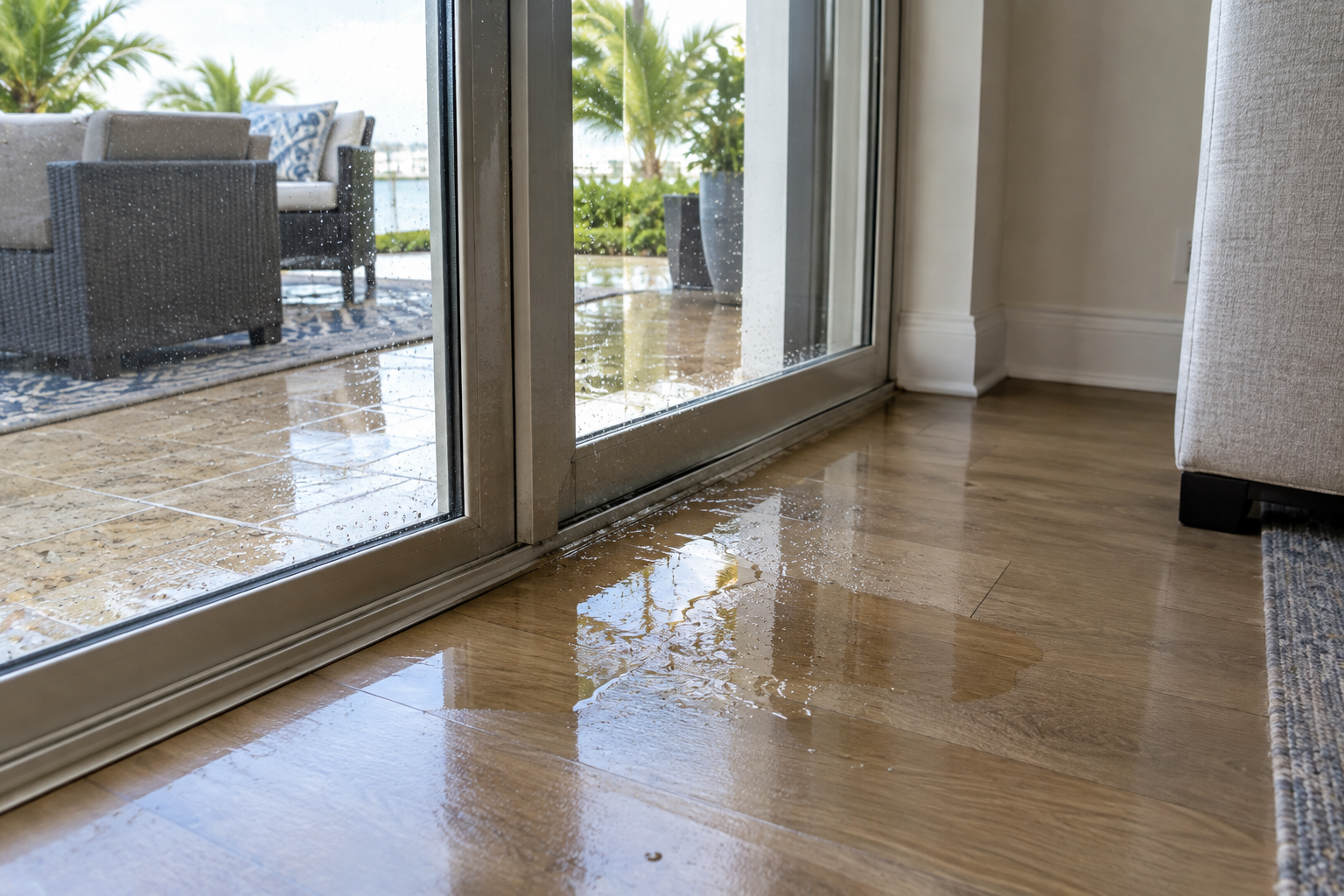
Sliding patio doors take a beating in our tropical climate. Between intense UV rays baking the rubber seals, salt air corroding metal tracks, and high winds pushing rain horizontally, older sliders eventually give out.
Water intrusion usually boils down to three main culprits:
1. Clogged or Damaged Weep Holes
Look at the bottom exterior frame of your sliding door track. You'll notice small, rectangular slots called weep holes. These are engineered to allow water that collects in the track to drain safely back outside. In South Florida, these slots quickly fill up with dirt, sand, dead bugs, and patio debris. When weep holes clog, water has nowhere to go but to back up, spill over the interior track, and flood your living room floor.
2. Worn Out Weatherstripping & Track Seals
The rubber, felt, and silicone weatherstripping lining your door panel creates a tight seal when closed. Over time, South Florida’s heat and humidity cause this material to dry-rot, crack, or compress. Once the seal fails, wind-driven rain easily forces its way past the glass panels.
3. Structural Frame Warping & Track Deferment
Older standard aluminum or vinyl sliding doors aren't built to withstand heavy wind pressure. During severe storms, strong gusts literally push against the glass, flexing the frame out of alignment. Once the frame warps (even by a fraction of an inch) it breaks the seal against the threshold, allowing sheet rain to blow directly under the door.
Troubleshooting Guide: Repair vs. Replace
Before writing off your patio door, use this quick checklist to determine whether a DIY fix or a professional replacement is required:
Why Upgrading to Impact Patio Doors Eliminates Leaks Permanently
If your sliding door is over 10 to 15 years old, constantly repairing seals or clearing tracks is usually just band-aiding a bigger structural issue. Standard sliding doors simply weren't engineered for the extreme Design Pressure (DP) ratings required in South Florida today.
Upgrading to a high-velocity Impact Sliding Glass Door solves the leakage problem while transforming your home in three critical ways:
1. Engineered Water Resistance & High DP Thresholds
Impact-rated sliding glass doors are built with heavy-duty commercial-grade aluminum or reinforced composite frames, paired with deep, sloped water thresholds. They undergo rigorous testing where water is blasted against the assembly at hurricane-force speeds. They are legally certified to handle extreme wind-driven rain without overflowing into your home.
2. Multi-Point Heavy-Duty Locking Mechanisms
Standard sliders rely on a single latch that can easily yield under high winds. Impact sliding doors feature heavy-duty multi-point locking systems that anchor the door panel tightly into the frame at top, middle, and bottom points, ensuring an airtight, watertight seal 360 degrees around the opening.
3. 24/7 Storm Protection & Insurance Savings
Beyond stopping rain leaks, replacing an old slider with a code-compliant impact door protects your home against Category 5 hurricane winds and flying debris, without ever needing to deploy heavy accordion or panel shutters over your patio. Plus, replacing unrated patio doors completes your home's opening protection, helping you unlock maximum wind mitigation discounts on your property insurance.
Stop Mopping Up After Every Rainstorm
A leaking sliding glass door isn't just an inconvenience, it's an active threat to your home's subflooring, drywall, and interior finishes, leading to costly hidden mold damage behind baseboards… not to mention a safety hazard!
If your patio door is showing its age and failing during afternoon storms, don't wait for hurricane season to test it further.
Ready for a leak-free, storm-ready patio opening? Contact our expert team at Florida Home360 today to schedule a zero-pressure in-home assessment. We’ll help you find the perfect HVHZ approved impact sliding or French door system engineered specifically for South Florida weather!
Awards & Accolades

700+ 5 Star
Google Reviews

A+ BBB
Rating

Angie Super
Service

GAF Master
Elite

Leader in
Energy Savings

